Like many of you, I am a part-time Organist and part-time Pianist. My organ jobs include Village Church Northbrook and North Park University and Theological Seminary. I occasionally perform on organ with the North Shore Choral Society and play as Guest Organist at various churches. I’m a Collaborative Pianist at North Park University, play for the Chicago Symphony Chorus, at DePaul University and Northwestern Universities, North Shore Choral Society, and I coach singers. Having studied piano, violin, organ, and voice, I enjoy collaborating with other musicians. How about you?
Most of us collaborate regularly with singers – in a choir or as soloists. My church choir usually sings with organ, even when anthems are written for piano. The choir is small. The University Choir is comprised of young voices. As a collaborator we need to consider balance, of course, but also adapting/editing the part to sound its best on organ. Of course, if there’s a conductor we must follow his/her lead.
When collaborating with singers or instrumentalists without a conductor, we need to consider many factors. One factor is tempo, adapting it to suit the ensemble. When recently rehearsing with a trumpet player, we agreed on a tempo after several times through the piece at varying speeds. This adds excitement and interest, creating a new piece of music when played for the congregation. Since we’re never the same person day after day, our music will also vary – to the benefit of the listener.
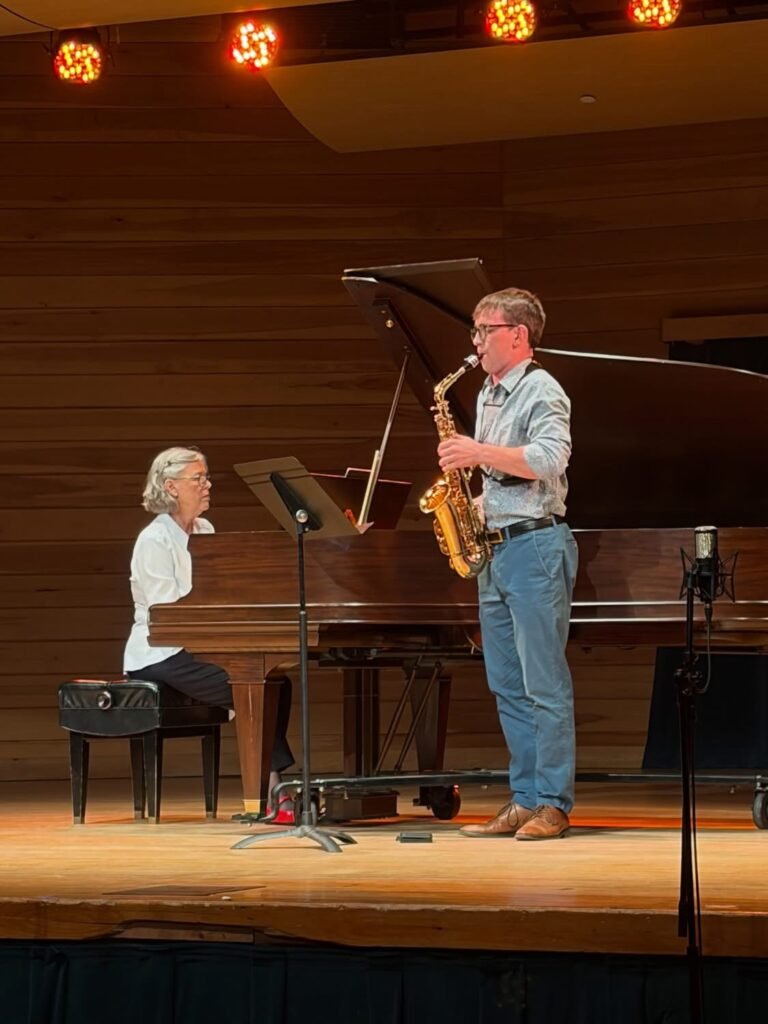
My favorite instrument with which to collaborate is the saxophone. There is a large body of work written for classical saxophone and piano or organ. As on the Oct. 15, Faculty Recital at DePaul University with Saxophonist Jeremy Ruthrauff, I work hard on my own (piano) part. Each rehearsal gives insight to where I must pay more attention to his part for ensemble and balance. The joy of bouncing ideas off each other as we play is what makes collaborating so satisfying. As we get to know each other personally and musically, our musicality can shine through as a team. (I love to engage musically with the other player without words exchanged.) When I’m back home “wood-shedding,” I keep what I hear when we play together in my ear, thus guiding my solo practice. The beauty of coming together next time, hearing improved ensemble and nuances is truly a joy.
Preparation for another concert program with Soprano Katherine Petersen, (4th Presbyterian Church, Nov. 6,) has brought us closer as friends as well as musicians. The pieces she has chosen and her willingness to hear my ideas has made us a better duo. We use our rehearsal time to try out what occurred to us in our own practice. The color of her voice, her vibrato, and her phrasing are all an inspiration to me as I play. Likewise, the way I set up her entrances and support her breath choices help her to sing her best.
I play for many voice auditions, students and professionals. It simply doesn’t work to play the piece, “the way I always do.” As we exchange a few words regarding tempo, I get an idea of the size of voice and personality. This gives me information which translates into how loudly I play the introduction, even how much pedal to use. In Baroque music, I listen to see if the singer ornaments something I can echo. The more clearly the singer presents his/her musical ideas the more solidly I can join in. Especially when sight-reading, communicating the musical ideas far outweighs playing every note correctly, (though I try to do that, too.) My goal is to make the auditionee as comfortable as possible to be able to do their best. My musical collaboration helps achieve this goal.
Which instruments or singers are available to you? Do you, as I, have a professional violinist neighbor who likes to read through sonatas together? Do you have a string quartet, an oboe or flute, or singers who enjoy duet or quartet singing at your church? Do you know someone who’s never heard classical saxophone? See which new ensembles you can put together to broaden not only your repertoire, your collaborative skills, and enrich your audience. Remember to use children and youth who are developing their musical selves.
I think we could all use more collaboration in our lives. Notice I don’t refer to this endeavor as “compromise,” “following” the other musician, or insisting the way I played the piece with another person was “correct.” When I play a familiar piece with a new person, I immediately ask for tempo and am alert to phrasing, breaths, dynamics, and other nuances. Communicating without text is the magic of instrumental music. If we’re open to many musical interpretations our lives will be enriched. We can take these skills into the rest of our relationships. Being a Collaborative Musician is useful and important. It’s good to be challenged and encouraged at the same time. Try it!
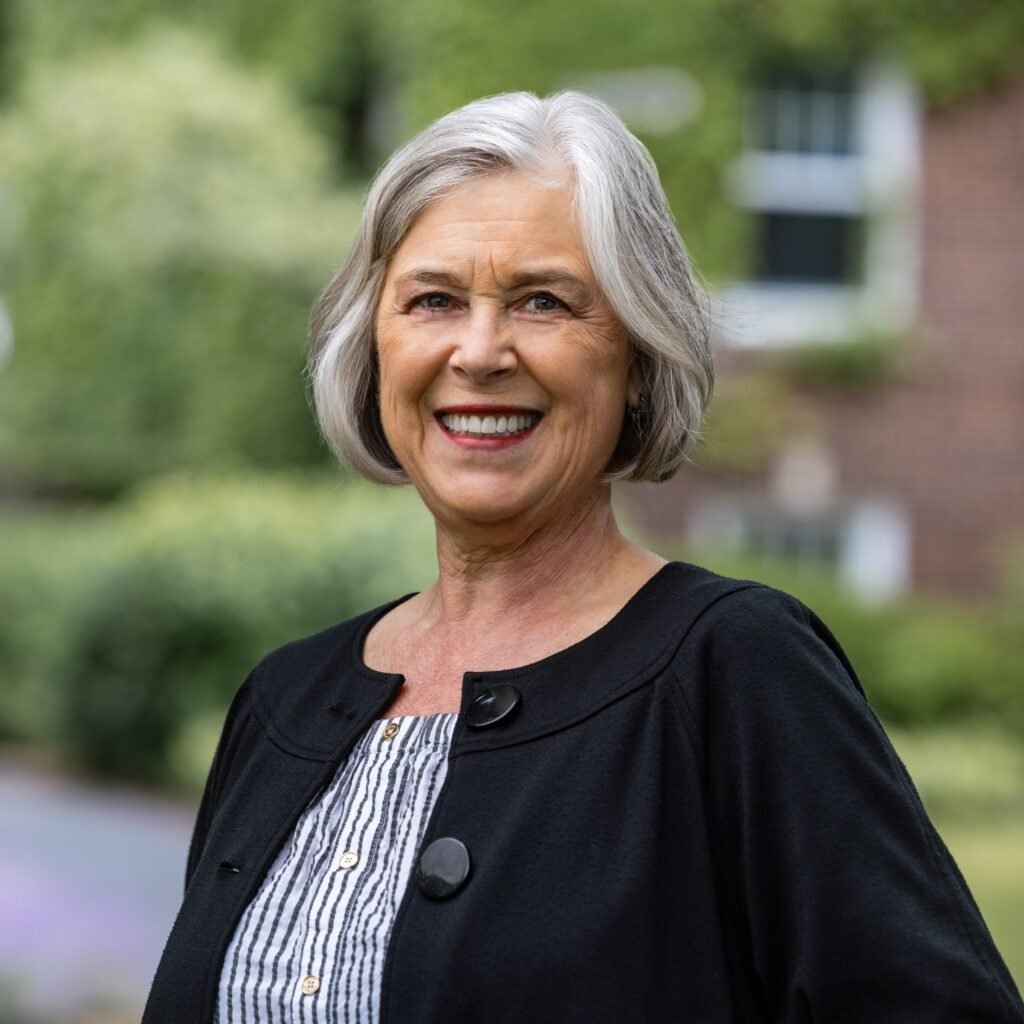
Sharon R. Peterson